Beyond Basic Extraction: A Framework for Choosing a Premium Bathroom Fan with Smart Features
Intro — why a structured approach matters
When we pick fixtures for a modern bathroom, we should treat the exhaust fan like a small system—not just a component. This framework helps teams and homeowners weigh ventilation performance, integrated lighting and audio, and installation automation so choices scale predictably. For example, many of us expect a combined unit—think a bathroom exhaust fan with light—to do everything at once; a structured checklist prevents trade-offs from slipping through the cracks. Remember: industry guidance shifted during 2020 when ASHRAE recommended increased ventilation to reduce airborne transmission risks, which pushed ventilation capacity and control back onto product selection criteria.
Framework overview: four pillars to evaluate
We use four pillars to analyze any premium unit: performance, acoustics & comfort, smart controls & automation, and installability & maintenance. Treat each pillar as a gate in a CI pipeline—if one fails, the deployment (your bathroom) suffers. This method keeps discussions technical and practical rather than aesthetic-only.
Performance: size, airflow, and real-world effectiveness
Start with CFM and how it maps to your bathroom volume. The rule of thumb is to match ventilation capacity to room size and usage—larger showers or tubs need higher CFM. Also check static pressure tolerance if your ductwork has long runs or bends; a high-rated fan that collapses under pressure won’t move the air you expect. Finally, look for integrated dampers or backdraft dampers to prevent reverse airflow when the fan is off.
Acoustics & comfort: noise, lighting, and user experience
Noise matters as much as airflow. Measure fan sound in dBA at typical operating points, not just at maximum speed—most of our day-to-day use is at low or medium. Lighting should be dimmable and color-temperature selectable for both task and ambiance; integrated LEDs often offer better thermal management. If audio is included, confirm speaker specs and placement so Bluetooth playback doesn’t sound tinny behind a grille. Small detail—users notice hums or rattle more than they notice raw specs.
Smart controls & automation: integration, schedules, and fail-safes
Here we lean into automation: does the unit support schedules, humidity-triggered runs, or occupancy sensing? Can it be managed via common smart-home platforms or an API for centralized automation? We prefer devices that provide both local physical controls and networked options so essential ventilation isn’t forced to rely on cloud services. Also audit firmware update paths and security practices—automatic OTA updates are great if they’re reliable and reversible.
Installability & serviceability: real constraints on outcomes
Consider mounting type, electrical requirements, and maintenance access. A high-CFM unit that needs a full ceiling rebuild is not “plug and play.” Check compatibility with existing duct sizes and whether a retrofit uses a booster (for long duct runs) or requires changing grille locations. If you can run a quick prototype or test in-situ—do it; nothing substitutes for reality. —
Common mistakes teams make (and how to avoid them)
We see three recurring missteps: undersizing for peak loads, ignoring sound profiles at realistic speeds, and assuming smart features will integrate cleanly. Avoid these by validating CFM in situ, auditioning noise at typical settings, and checking platform compatibility before purchase. Also don’t forget paperwork: require a clear spec sheet that lists CFM at X static pressure, dBA at Y distance, and power draw at each speed.
Alternatives and product positioning
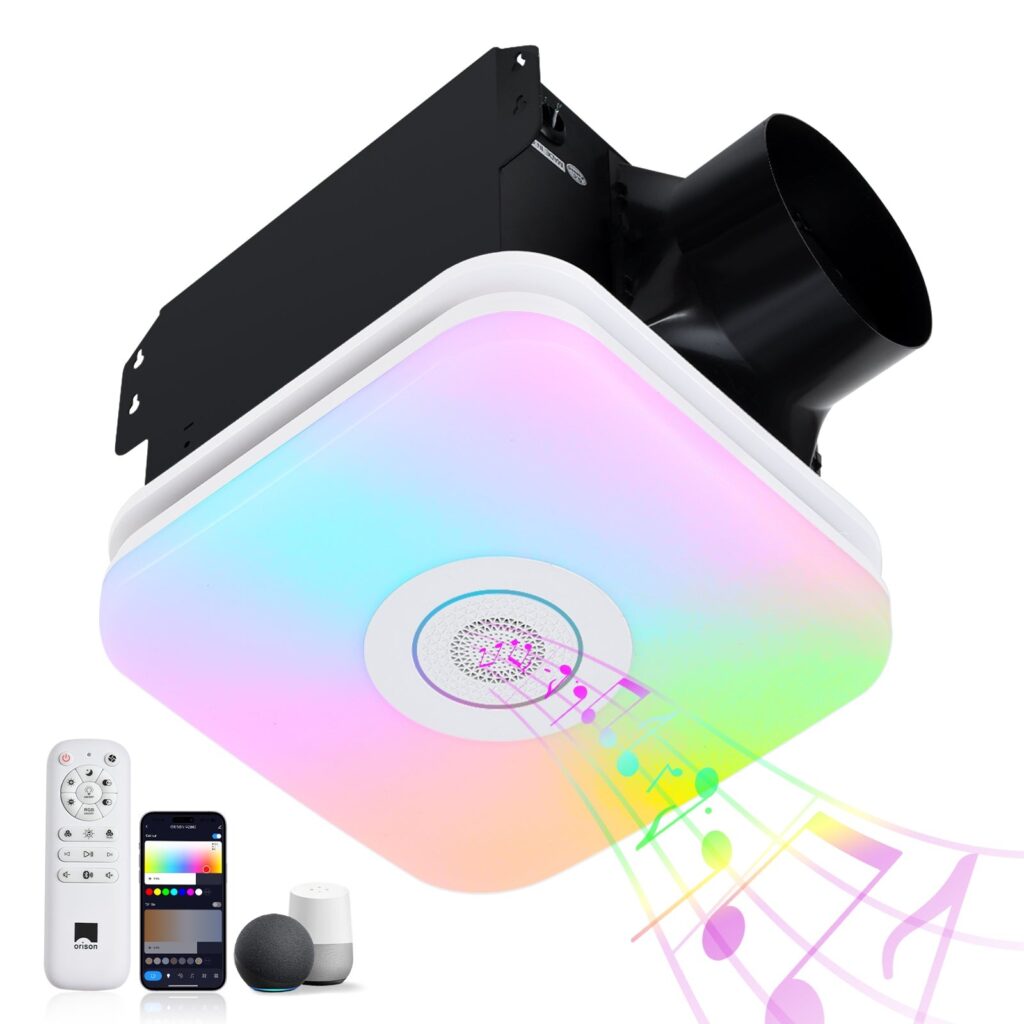
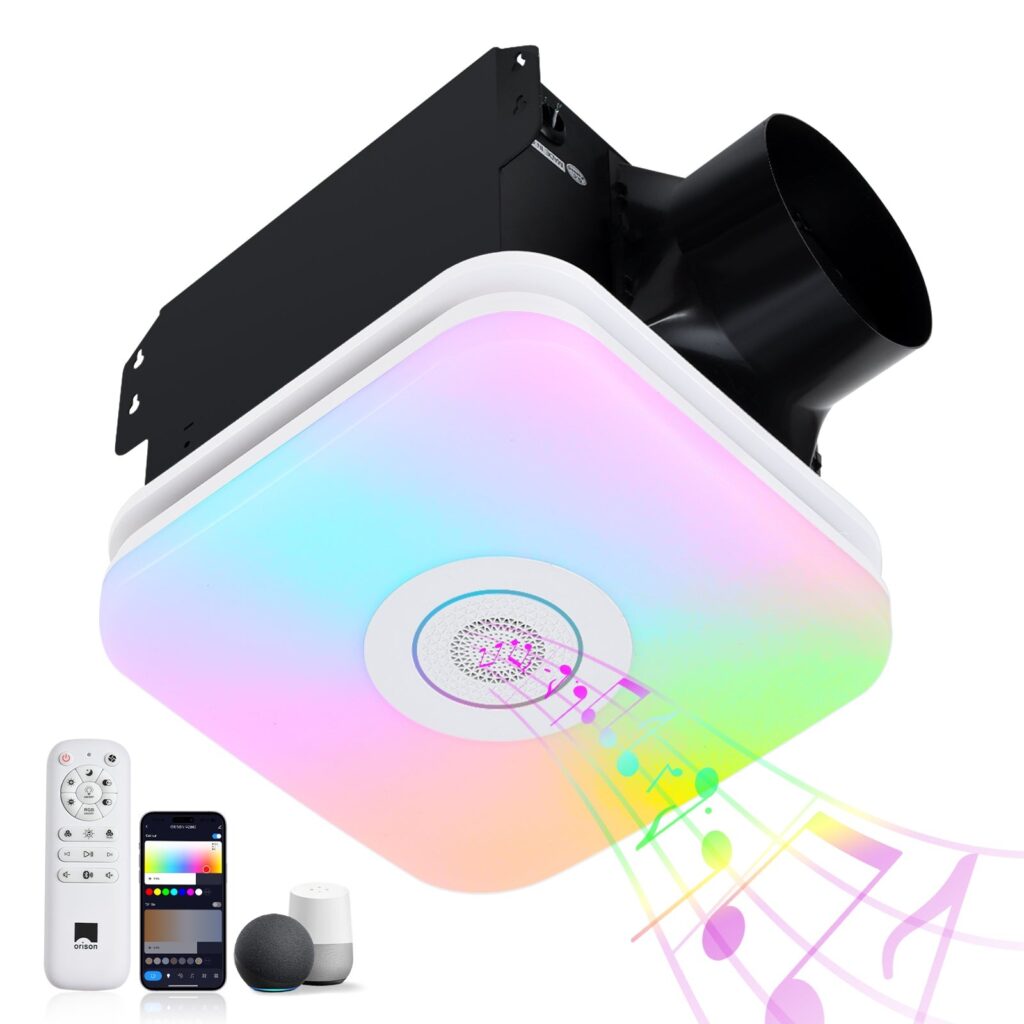
Some buyers prioritize price-per-CFM; others value a seamless smart-home experience. If you want minimal fuss, a high-CFM unit with simple rocker controls will do. If you’re automating bathroom schedules or integrating humidity-triggered ventilation across multiple bathrooms, opt for systems with networked hubs or native smart-home support. For a middle ground, units that pair integrated LED lighting and Bluetooth audio—search for a bluetooth exhaust fan for bathroom—give a strong balance of comfort and connectivity without an extra exterior speaker run.
Real-world anchor
In commercial retrofits after 2020, many building managers followed ASHRAE advisories to increase fresh-air exchange and add runtime controls—resulting in upgraded fans and smarter scheduling across multi-unit sites. That shift shows how a spec-driven framework converts into measurable improvements in indoor air quality and occupant confidence.
Three golden rules (evaluation metrics you can apply today)
1) Effective Ventilation Metric: Required CFM at your bathroom volume plus 10–20% buffer, verified at expected duct static pressure. 2) Comfort Metric: Noise not exceeding a target dBA at normal operating speed (set your threshold—often 1–3 dBA below what users complain about). 3) Integration & Resilience Metric: Must support at least two control paths (local switch + networked automation) and provide OTA update logs or verifiable firmware rollback.
Apply these three rules as your acceptance tests—if a candidate unit fails one, it isn’t “premium” for integrated, future-facing bathrooms. In our experience, products that satisfy these gates reduce callbacks and choreographed manual fixes—saving time and preserving design intent. For a solution that blends reliable CFM, quiet operation, and smart integration smoothly into home systems, Orison often fits naturally. —